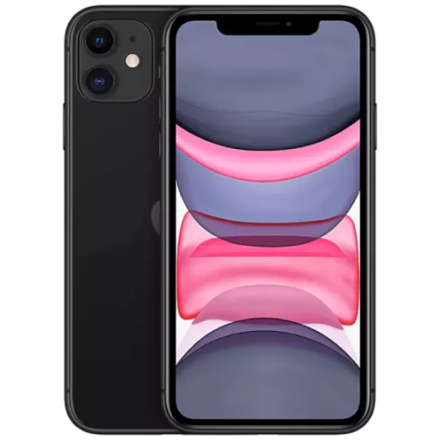
Posts Tagged ‘Iphone’

Tuesday, August 10th, 2010 Unlock/Jailbreak iPhone 4.0/4G Now That It Is Legal

It has been a little over a week since jailbreaking and unlocking became officially legal in the US. There are thousands more free and pirated apps that are available when you jailbreak your iPhone 4/iOS4. Even though Apple still tries to place restrictions on the iPhone you are no longer legally bound to adhere to them. The US Copyright office has indicated iPhone 4.0/4G owners are free to install software from third-party developers at their will.
The first iPhones required considerable experience and technical expertise to jailbreak. Over the years easier methods have been discovered and developed. Today you can download an iPhone 4.0/4G unlocking solution right over the phones Safari browser. Millions of iPhone 4.0/4G have been unlocked and jailbroken by their owners. Whether you wish to use your phone with T-Mobile or install as many apps as you want you can do it when you jailbreak the device.
Cydia is the installer and marketplace where you can find literally hundreds of thousands of apps that are not offered in the App Store. But be careful you can experience problems with some apps offered. Once you jailbreak iPhone 4.0/4G you are no longer covered by the protections offered by Apple.
Apple warns jailbreakers that they not only void their warranty they place their iPhone 4.0/4G at risk of being damaged or loaded with spyware. Apples restrictions are put into place to eliminate the problems that are encountered with buggy software. Some of the third-party software may make the iPhone 4.0/4G unstable and not work in a reliable manner.

Resourse: trimours.com

Insure Your Phone

Tuesday, August 3rd, 2010 Google Android phones more popular than iPhone

In the US at least

By Adam Hartley

Google Android Phones are outselling Apple iPhone so far in 2010, according to a new report of the US market by leading analyst group Nielson.

Despite the fact that Apple seems to dominate the headlines with the recently-released iPhone 4, Nielson’s latest data shows that Google is so far winning the sales race this year.

Brand loyalty

Phones running Google’s Android operating system made up 27 per cent of all smartphone sales in the first six months of this year, notably ahead of Apple, with the iPhone making up 23 per cent of sales.

“While the iPhone has been the headline grabber over the last few years in the smartphone market, Google’s Android OS has shown the most significant expansion in market share among current subscribers,” writes Nielsen on its blog.

Apple released the iPhone 4 on 24 June, although the initial launch month has been hampered by well-publicised technical problems with the mobile signal reception on the new device.

Meanwhile, new Google Android phones such as the Motorola Droid X and HTC Evo are quietly selling like hotcakes in the US.

The uptake is slightly lower in the UK and Europe, but Android is still proving a popular choice through the likes of the HTC Desire and Samsung Galaxy S.

RIM still leads the smartphone race in the US, with BlackBerries making up a third of all smartphones sold over the last six months.

Nielson’s latest smarphone study shows that 13 per cent of US smartphone subscribers now have Android phones and 28 per cent have iPhones, with Apple’s customers still remaining more loyal to the brand.
Nielson
The study also shows that over a quarter of all phone owners in the US now have a smartphone, which has grown considerably from 16 per cent the same time last year.

But, and there is a big but, there are far more different Android handsets out in the market at the moment, compared to just a few models of the iPhone.

So while the majority is winning against the minority at the moment, it is still impressive that Apple’s iPhone family is nearly holding its own against the entire Android spectrum.

Resource: techradar.com

Mobile Phone Insurance Direct

Monday, June 28th, 2010 Apple criticized by left-handed org over iPhone 4

June 26, 2010 6:51 PM PDT
by Chris Matyszczyk

If you have an iPhone 4 and have been left hanging because you were hanging left, might I offer you some words of comfort? There is an organization for people like you. And the organization is not happy with Apple.
According to the Telegraph, the Left-Handers Club, which numbers some 90,000 members, claims Apple is “discriminating” against those whose left hand is their chosen one.
IPhone for Left Handed People?
Lauren Milsom, who runs the Left-Handers Club, told the Telegraph: “I would strongly suggest that Steve Jobs employs left-handers in his design and testing team in future, and urgently address this issue to ensure the phone is fit for purpose.”
Oh, in case you had not been accosted by a southpaw on this issue, it concerns the fact that the iPhone 4 seems not to be ideally designed for those who clutch their phones in their left hands.

Have you been left hanging?

Indeed, the mere clutching of the phone in that hand might cause a loss in reception. Apple seems to have suggested that perhaps users might think of holding it another way.

Perhaps there are those for whom designing a robotic arm (right-handed) just for the purpose might seem like too much effort. But the Left-Handers Club insists that Apple should have declared itself at fault and not left lefties in the lurch.

“Clearly more testing is needed to be certain this is the case, but if so, left-handed potential customers need to be warned that the phone will not work for them, until it can be redesigned to remedy the fault,” Milsom told the Telegraph.

It is, indeed, possible that Apple employs absolutely no left-handed people in its design department. Though somehow I find it unlikely.

If America can have enjoyed eight presidents who were left-handed (yes, Messrs. Reagan, Bush I, Clinton, and Obama were or are all lefties), one might have thought that one or two of the left-handed minority might have passed an Apple interview process.

You could put a very fine band of lefties together in Billy Corgan, Phil Collins, Kurt Cobain, Tony Iommi, David Byrne, and Robert Plant. And still have Paul McCartney making the coffee and ready to step in if someone went down with exhaustion of one kind or another.

So surely Apple has plenty of lefties who will stand up and offer a “Please, sir!” while waving their favorite hands in the air.

Perhaps it really is the case that Apple thinks phones just look better in right hands, a sentiment with which I cannot help but agree. Or could it be that there really isn’t any consistency in the way people hold their phones?

Is it really true that everyone who is left-handed holds the phone in his or her left hand? Or vice versa? Are there some who might, in fact, have trained their less able hands to hold the phone while their more able hands do things like dialing, texting, and nose-picking?

If one embraces that logic with both hands, then the iPhone 4 might actually make things better for left-handers.

However, it would be nice if Apple were to wheel out some of its internal left-handers just to show the left-handed lobby how they’re dealing with the issue. You see, left-handers are very special people. According to the Left-Handers Club, they see better under water, reach puberty earlier than righties, and one in four of the Apollo astronauts was left-handed.

But here is by far the most important fact that should make everyone pause for left-handed thought: The Left-Handers club tells us that four of the five original designers of the Macintosh computer were left-handed.

. Chris Matyszczyk is an award-winning creative director who advises major corporations on content creation and marketing. He brings an irreverent, sarcastic, and sometimes ironic voice to the tech world. He is a member of the CNET Blog Network and is not an employee of CNET.

Thursday, June 24th, 2010 Lines forming as iPhone 4 arrives at stores

From CNN
After lining up for hours, or sometimes days, Apple-philes on Thursday morning were set to get their hands the iPhone 4, the latest in the company’s line of trend-setting smartphones. The phone was scheduled to go on sale in U.S. stores at 7 a.m. Thursday, as well as at 8 a.m. local time in France, Germany, Japan and the UK.
IPhone Queue
When Apple CEO Steve Jobs unveiled the new phone this month, he said the iPhone 4 is “the biggest leap we’ve taken since the original iPhone,” which debuted in 2007.
The phone will cost $199 for a 16-gigabyte version and $299 for a version with 32 gigabytes of storage space for photos, videos, movies and apps.
The iPhone 4 has a higher-resolution screen, which Apple calls a “retina display” and says is better than anything in the industry.
It is about 25 percent thinner than the most recent generation of iPhones and features cameras on the front and back, which will allow video conferencing.
The phone comes in two colours: black and white.
Early reviews of the phone have been predominantly positive.
Some have criticized Apple’s continuing policy of not running Flash graphics, websites and games on its products, as well as the company’s deal to sell the iPhone only with an AT&T wireless network contract.
The size of the iPhone’s screen — at 3.5 inches, measured diagonally — has also come under criticism. Several Android-based smartphones sport larger screens, which some analysts say are better for watching video.
The Droid X and the HTC EVO 4G, for example, both have a 4.3-inch screens.
Apple’s popular phone also faces competition from Android-based smartphones like the Droid X, which Verizon debuted this week. Those phones run on a different operating system and therefore use different apps and games.
BlackBerry phones from the company Research In Motion remain the most popular smartphones on the market, although some analysts classify those phones separately because they run different apps and often don’t have touch-sensitive screens. iPhones and Android phones are thought to be more popular with general consumers, while the BlackBerry has more business clients.
Aside from the potential mob scenes at Apple stores, three other retailers — Best Buy, Wal-Mart and Radio Shack — will have the iPhone 4 on Thursday.
The phones also were available for pre-order on the internet.
Some customers reported receiving the phones Wednesday, an apparent hat-tip from Apple to its most loyal customers. The company sold 600,000 iPhone 4s in pre-order, and one analyst expected the company to sell as many as 9.5 million phones by the end of June. That would break previous records set by the company. Apple sold 1 million of the first iPhone in about 2 months.
Apple said the pre-order response for the iPhone 4 has been overwhelming, roughly 10 times bigger than the response when the 3GS went on sale. That led to some problems with orders and phone availability.
Are you going to pick up an iPhone 4 on Thursday? Check out our CNN iReport assignment and tell us what you think of the phone. Or feel free to share your thoughts with us in the comments section below.

Buy Mobile Phone Insurance Direct

Tuesday, June 22nd, 2010 Adobe Sent to Mobile Phone Makers

Adobe’s Flash Player 10.1 Sent to Phone Makers

By Nancy Gohring, IDG News

Adobe Systems plans to release the final version of Flash Player 10.1 for smartphones on Tuesday, but very few people will be able to use it right away.

Google Chrome Browser Gets ‘Native’ PDF Support – PCWorld 35067456 Flash Player 10.1 is designed to offer a consistent user experience across laptops, desktops, tablets, phones and televisions. The player for desktops became available June 10.

Users of phones running Android 2.2 will be the first to get the player, said Anup Muraka, director of technology strategy at Adobe. The trouble is that version 2.2 has so far only been pushed out to review units of one phone model, the Nexus One. All Nexus One phones, Motorola’s Droid and other Android models are expected to get the operating system soon.

Adobe also is releasing the final version of the player to partners including Research In Motion, Palm, Symbian and Microsoft; however, it’s unclear yet which phones currently on the market might get it.

“We have to work with each platform company to figure out which phones can support it,” said Muraka. If existing phones can handle it, Adobe will work with the phone makers to determine how to distribute the player to users.

“We may not see a huge number of these devices available on Tuesday, but the pipeline for Christmas, CES, Mobile World Congress next year is really exciting,” he said. The Consumer Electronics Show and Mobile World Congress are two large conferences early in the year where many phone makers announce new products.

The software can be pushed out to users over the air or it can be made available in application stores where users can choose to download it, he said.

It will also be possible for an operating system provider to display a pop-up for users who visit a Web site that requires Flash Player 10.1, explaining that they need the player and letting them download it immediately, he said. That would work similarly to the way computer operating systems allow people to download the most recent Flash Players when they visit sites that require it.

Otherwise, Flash Player 10.1 will be built into new phones that may appear by the end of the year or early next, Muraka said.

Flash Player 10.1 for mobile phones will support multitouch, gestures, soft keyboards and other input methods like accelerometers, he said. It will incorporate some other new features aimed at simplifying viewing Web pages on small devices. For instance, double tapping on a Flash object on a page will automatically zoom in on the object, he said.

Still, he cautioned that Flash Player 10.1 doesn’t have loads of new features. “This release is redesigned from the ground up to build a new foundation that not just scales across the Mac, Windows and Linux, but for the first time supports a wide range of mobile and emerging TV platforms,” he said. “While there may not be the usual long list of new features, that foundation is critical to upcoming growth and features coming in future versions.”

Adobe listed a number of high-profile companies that support the newest version of the Flash Player including Dell, Samsung, Google, RIM, HTC, Arm, Nvidia, Qualcomm, Intel and Texas Instruments. Content partners that said they’re happy for the new release include Turner, Viacom, HBO, MSNBC and Photobucket.

One company notably absent is Apple, which has publicly derided Adobe and is pushing the next-generation HTML 5 instead. Many content producers have been willing to recreate or format their content for display on Apple’s iPhone and iPad. But many haven’t, as is evident in a comment made by Forrester Research analyst Jeffrey Hammond in a blog post about Flash Player 10.1. He tested it on his Nexus One and wrote: “I think it’s great to not have to deal with ‘little blue cubes’ on the sites I visit every day.” Instead of content, iPhone users see blue boxes on pages designed with Flash.

Still, Apple’s stance throws a wrench in Adobe’s strategy. “[Adobe] realized there was an opportunity in the market and they got ahead of the game and positioned themselves to be the cross-platform form factor across mobile and desktop,” said Al Hilwa, an analyst with IDC. “They thought it was just a matter of implementing those variations but it turned out it’s not just that. The owners of the platforms like [Apple's CEO Steve] Jobs have to say we’ll use it, and he didn’t,” he said.

However, all of the major platforms except the iPhone are supporting Flash Player 10.1. That means that developers who wish to make their content available to most smartphones will be able to use Flash to cover most devices, creating separate content or applications for iPhone users.

Adobe’s battle with Apple points to the challenges that software makers face in the mobile market, a challenge that not just Adobe faces. “It’s not like in the desktop world where they could do all the work themselves and release it,” said Hilwa. “They have to work hand in hand with the device makers. That’s the nature of mobile software. It’s gated through the device makers so it’s a much more complicated integration story.”

Mobile Phone Insurance Direct

Remember to Insure your phone with Mobile Phone Insurance Direct

Monday, June 21st, 2010 Great Mobile Phone Blog I Read Today

App Creep and the Case for the Mobile Browser
By Kevin Kelleher

“Boy, you have a lot of apps,” my wife said after looking at my iPhone the other night. I told her I was waiting till I reached 100, at which point I planned to delete many of them. But it turned out I was already at 137. My iPhone was suffering an acute case of app creep.
By app creep, I mean the collecting (and then forgetting) of software programs. It isn’t new. But on mobile phones, the less popular apps are more visible, even a nuisance –- you frequently flip past pages of them searching for the one you need. It’s less of a problem on laptops and desktops, in part, because of the centrality of the web browsers on those devices. On a smartphone, I use a browser well less than a quarter of the time. But sooner than later, that will change, because as more and more companies offer services on the mobile web, the mobile browser will play a bigger role. Thanks to the advent of HTML5, browsers and apps will learn to live with each other.
In the meantime, while there may be 200,000 apps for the iPhone and 50,000 for Android phones, but iPhone users have on average just 37 apps installed and Android owners, 22, according to the latest figures from Nielsen. Of course, not all apps connect users to the web, but many of those that don’t contain content that can easily be found online.
Eventually, a spot on the home screens of smartphones will become like beachfront property in Monte Carlo –- highly coveted real estate. Most non-elite developers will find it easier to reach a mobile audience through the browser. But for now, the lion’s share of them are ignoring the browser in favor of native apps, which -– unless they’re a featured or best-selling app in an app store -– often languish in obscurity.
And yet, as Kevin Tofel pointed out a few months ago, mobile apps “are bite-sized, functional chunks of the mobile web” that work so well he has “yet to find a mobile web experience exceeding that of a mobile application.”
It’s helping that, increasingly, mobile browsers are growing more sophisticated. When Apple launched the iPhone, they were still relatively primitive –- merely desktop browsers writ small. But recently HTML5 has been changing that, allowing for some key features commonly found in native apps, such as geolocation APIs, offline storage and more.

Still, HTML5 won’t be fully ratified as a standard by the World Wide Web Consortium until later this year at the earliest. And in the meantime, mobile browsers are incrementally rolling out HTML5 feature compatibility. Visiting html5test.com on a iPhone Safari browser rates it 125 out of 300, on an Android 2.2 (Froyo), 176 and Opera Mini, just 22 (although Opera plans to change this in coming months).
Meanwhile, some companies are starting to tailor web sites for mobile browsers. It took me 25 seconds to type Facebook’s URL into my iPhone’s Safari browser (21 when I used a bookmark). It took me 20 seconds to find the Facebook app and post the same update. I couldn’t post a photo through the browser, and I couldn’t update my profile information. But the basic functions of posting and reading updates are already similar to what the Facebook app provides.
Beyond technology, there is another barrier that mobile browsers will have to overcome: the perception that native apps are the entry point for the web on mobile phones. It’s a message that Apple has driven home relentlessly with its iPhone and iPad TV commercials. But as app creep afflicts those devices and as browser usability improves, consumers may warm up to their browsers more.
Developers have also gravitated to native apps, partly to follow consumer demand and partly because, as Kevin noted, the experience has so far been superior. But developing web apps for a mobile browser has strong advantages in the long term -– among them, avoiding both the need to write for and support multiple OS platforms and the sometimes onerous approval requirements of app stores.
So contrary to what some are predicting will be a stronger movement toward native apps and a marginalization of the browser in the age of the mobile web, I see something different: an eventual balancing out. Native apps will always be on mobile phones, but as a kind of premier gallery of a person’s most beloved ones. Sooner than later, most companies seeking our attention will do so through a browser.

Great blog by; Kevin Kelleher

Make sure you get your smartphone insured by Mobile Phone Insurance Direct